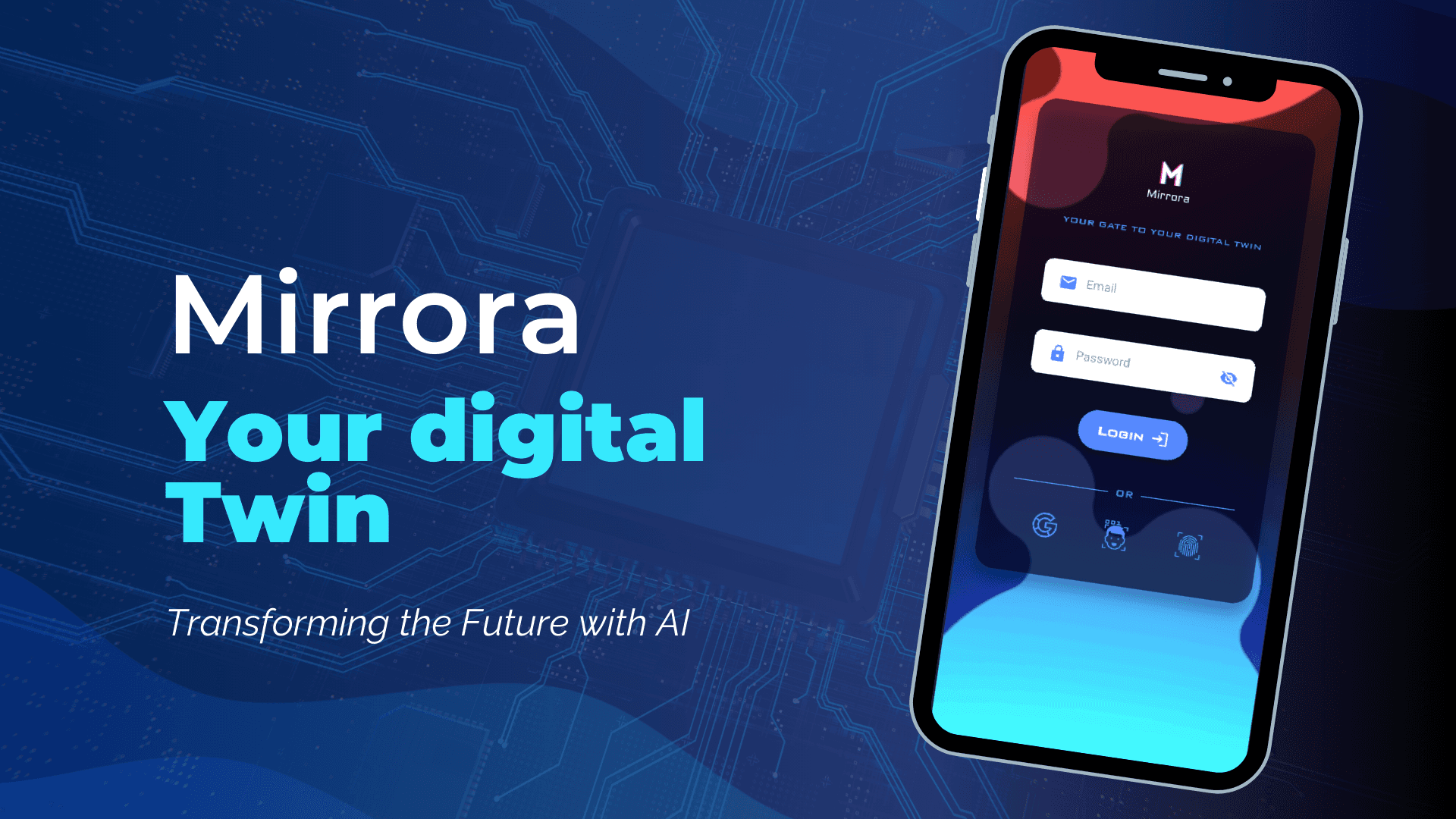
Mirrora
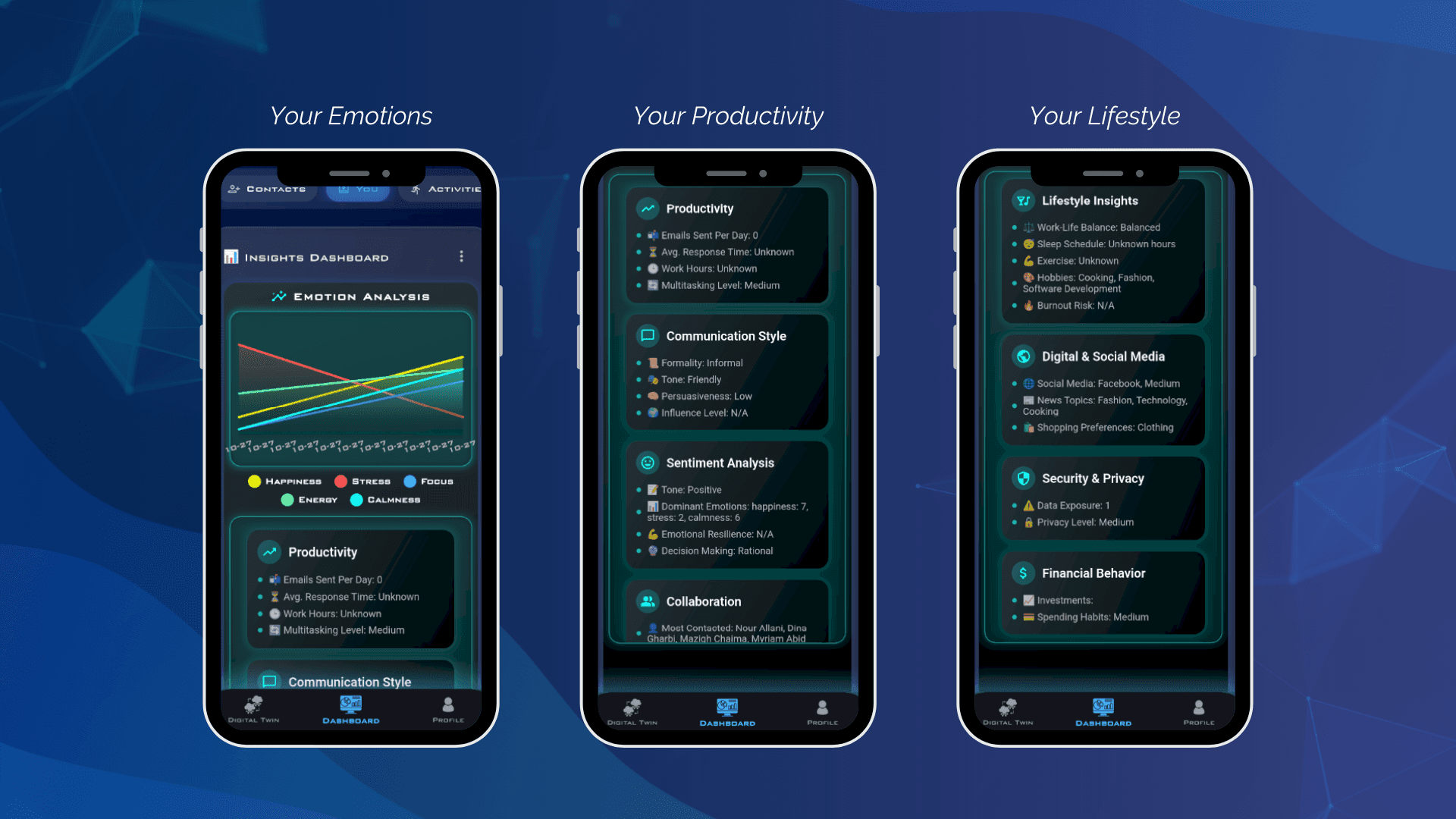
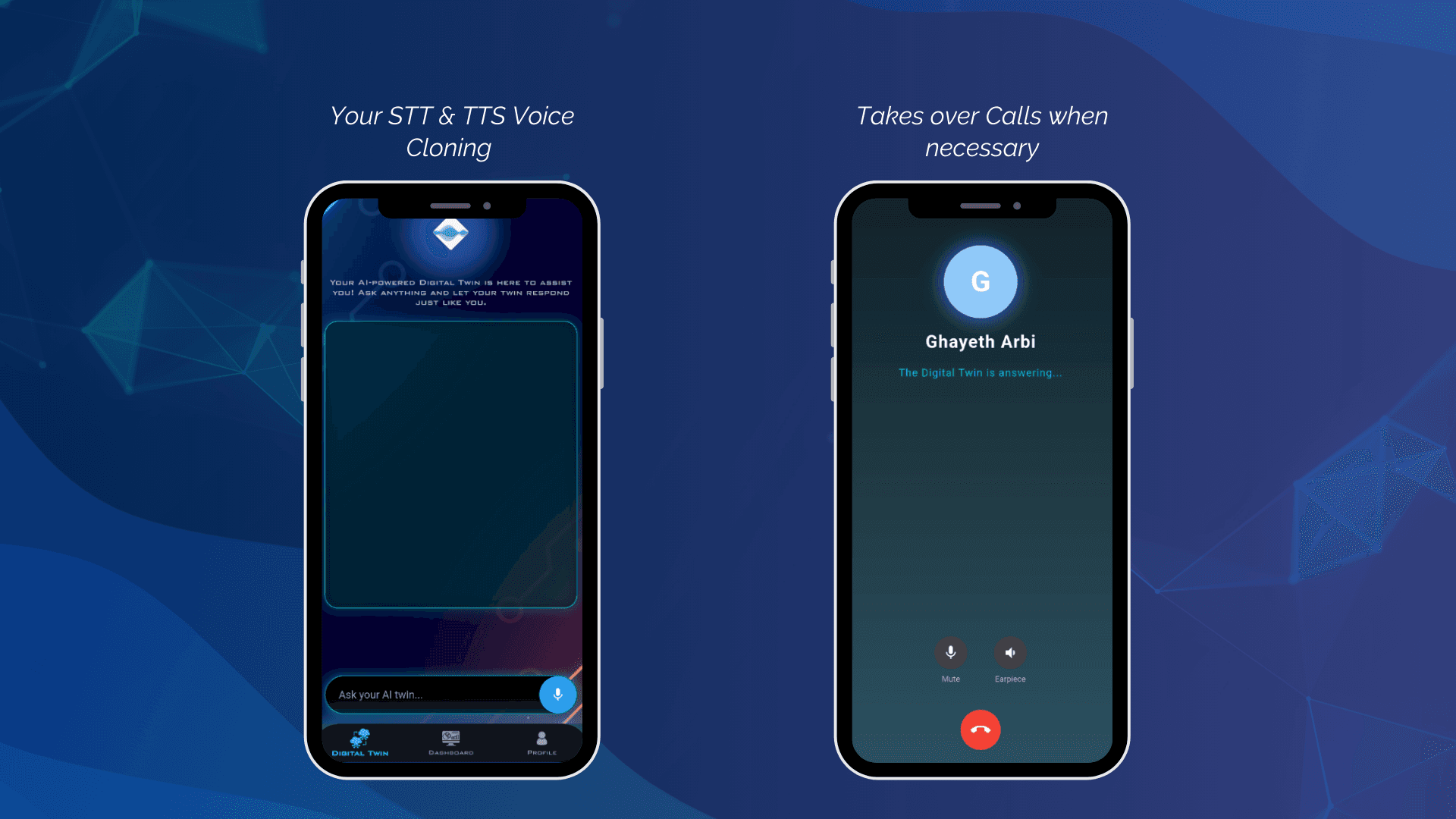
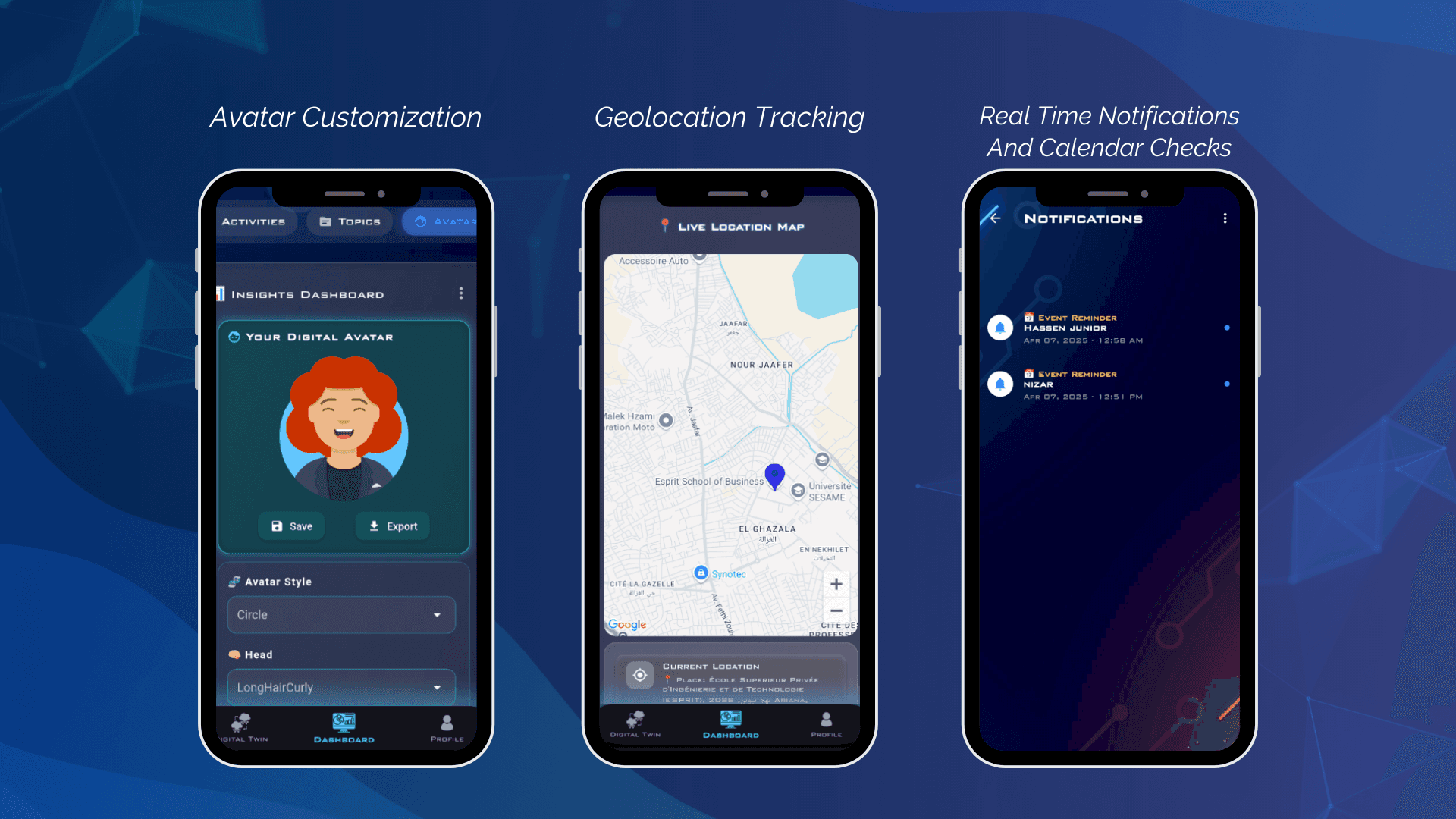
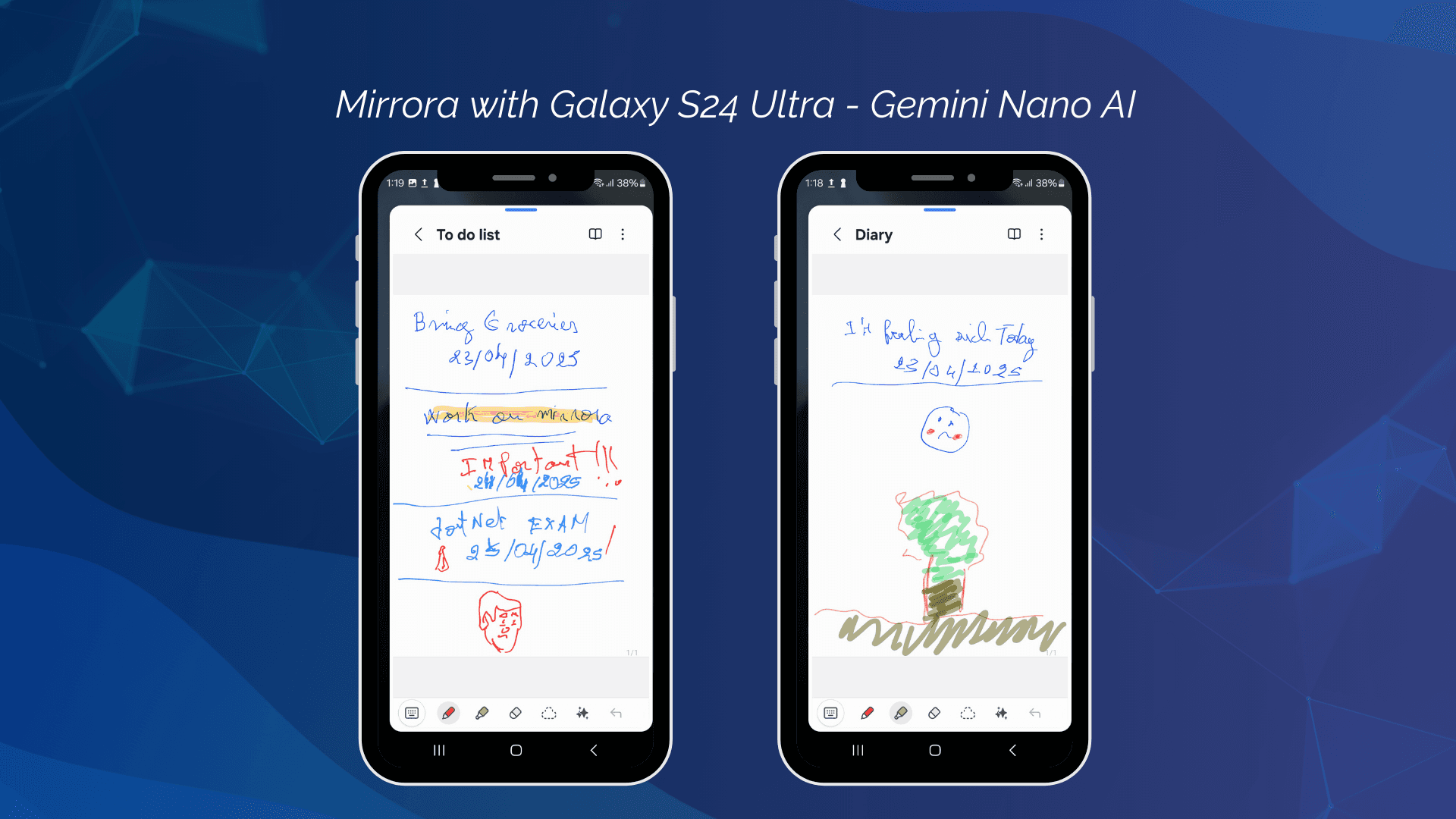
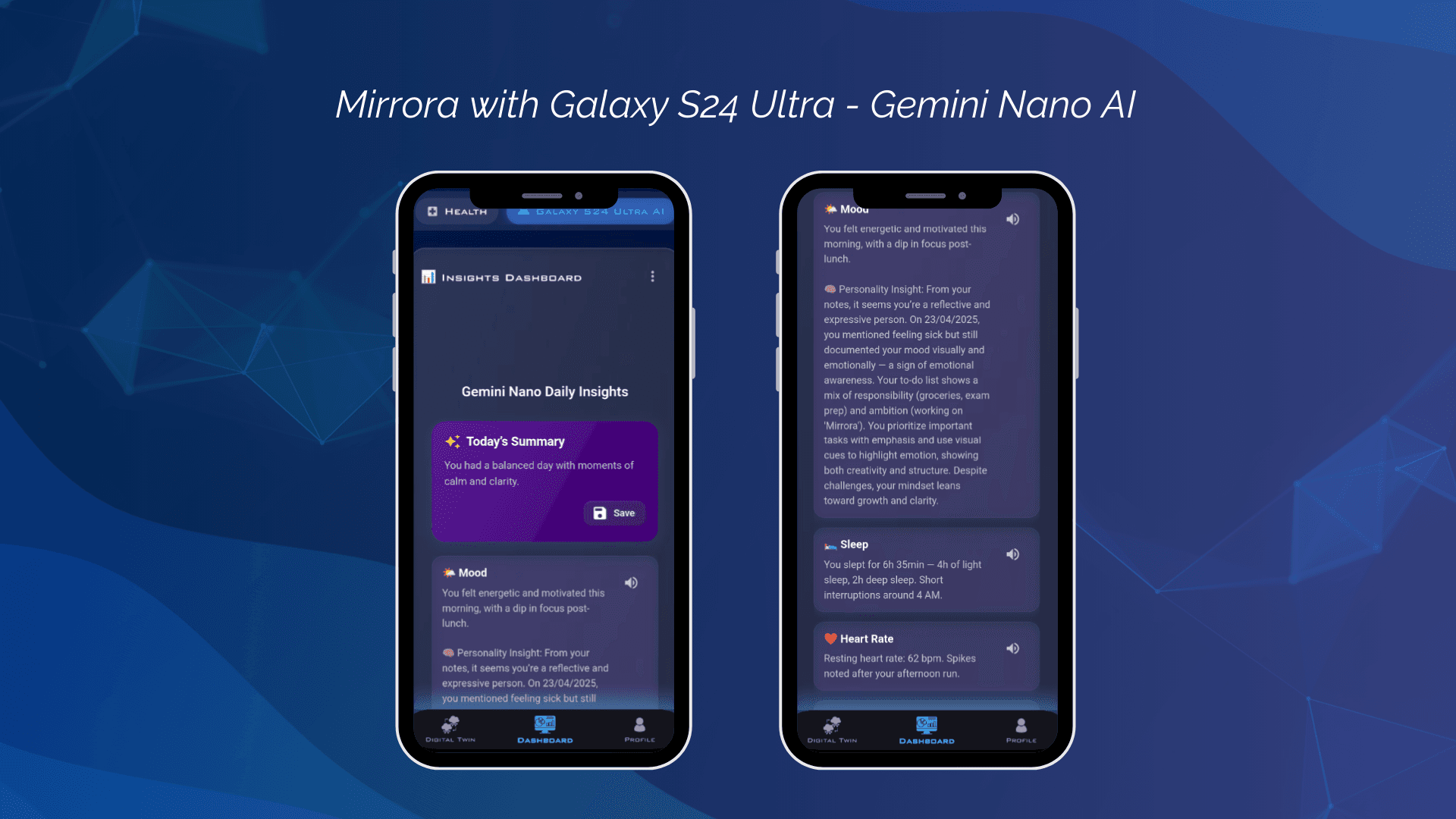
A cutting-edge mobile application that uses artificial intelligence to build a unique digital twin for every user. The application, which was created with user interaction in mind, enables users to create and interact with avatars that reflect their feelings, tastes, and behaviors. Through the integration of cutting-edge technologies like "ElevenLabs" for speech synthesis and "GPT-4" for natural language processing, "Mirrora" offers a distinctive experience that allows users to handle everyday chores, connect with their digital twins via text and voice, and analyze their own actions. Scalability and feature integration are guaranteed by the app's modular architecture. By providing a smooth fusion of personal assistant, memory keeper, and companion, "Mirrora" seeks to completely transform how people engage with technology
University Project
Challenge
Through Mirrora, we aimed to address several pressing modern needs. In a world of digital overload, where countless apps, notifications, and tasks compete for attention, users require a more seamless way to manage their digital lives. Traditional AI solutions often feel robotic and impersonal, highlighting the need for a more human-like and personalized assistant. Additionally, the challenge of digital memory loss—unsaved moments and unpreserved interactions—calls for a solution that safeguards meaningful experiences. Finally, with the growing importance of extended digital identity, Mirrora also responds to the emerging demand for digital legacy and posthumous avatars.
Results
Initial testing indicates strong user adoption, with participants showing high emotional engagement with the digital twin and a positive perception of its usefulness in task automation. To gather structured insights, we distributed a Google Form to 15 users with questions focused on emotional engagement and perceived usefulness, and the feedback confirmed the app’s potential in fostering meaningful interaction and delivering practical value. The evaluation also highlighted several strengths of the prototype, including a smooth mobile experience that ensures accessibility and comfort, coherent and natural AI responses that contribute to trust and immersion, an intuitive interface that reduces the learning curve, and strong technical modularity that provides a solid foundation for future development and scalability.









Conclusion
The development of Mirrora has been a journey for me and my team, both technical, human, and creative. Starting from an ambitious concept — creating an intelligent and emotional digital twin — we succeeded in designing a functional, coherent, and user-centered application. This project allowed me to deepen my skills in mobile development, software architecture, and AI service integration, but also helped me better understand the challenges related to personal data protection, online service latency, and user experience. Beyond the lines of code, ”Mirrora” made me reflect on our relationship with the digital world, memory, and how AI can enrich our daily lives. I'm are proud of the progress made and motivated by the prospect of turning it into a useful and accessible tool on a large scale.
Read the full research paper here